Lot-traceable, recall-ready, and costed per batch. We set it up on your own products, free, so you see it work before you decide.
One system, running as one


The six Odoo apps that run a food plant, sharing one set of lots, costs and books.
These are real screens from one build, a sauce maker. The shape is the same for a bakery, a beverage line, a spice blender or a co-packer: ingredients become a batch, the batch becomes finished units, and every step leaves a dated, costed, traceable record. Follow one batch and watch the data build itself.
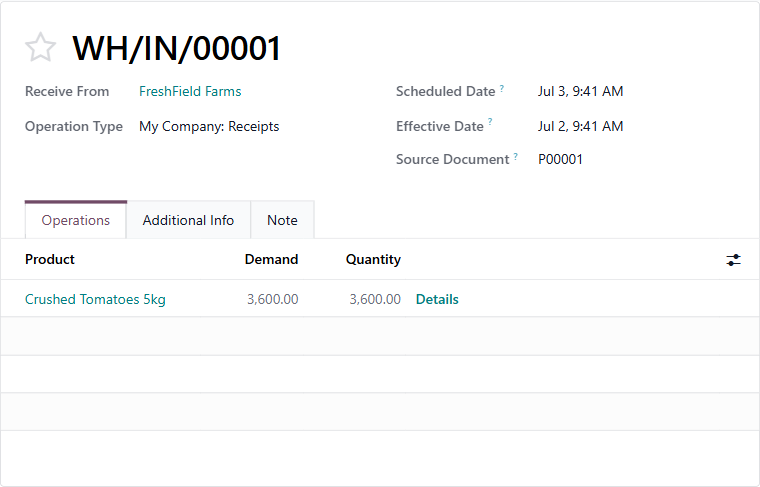
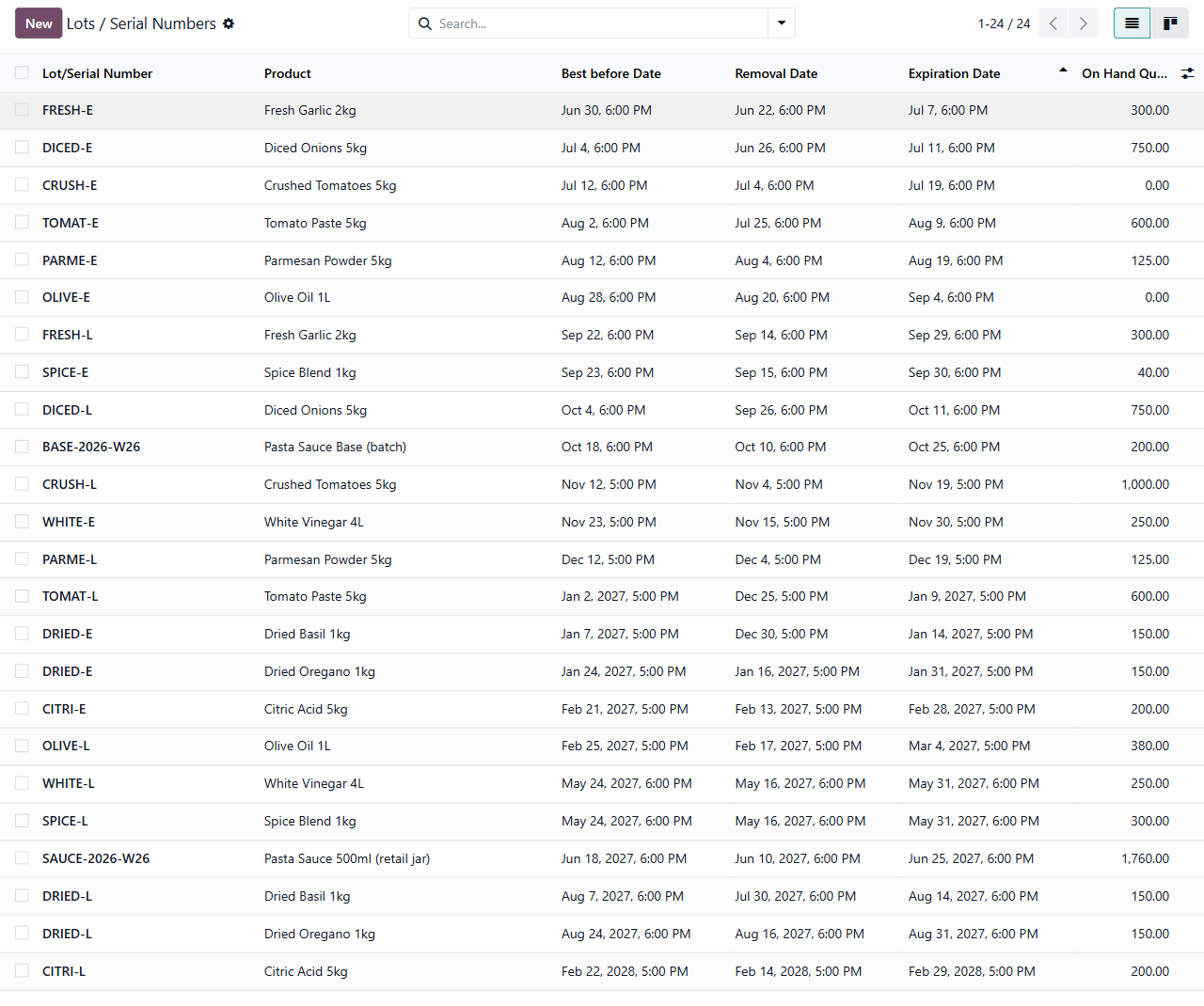
You raise a purchase order and receive against it. Each ingredient is booked as a lot with its own expiry, and you inspect it before you accept it. Nothing enters stock un-dated or un-checked.
Data created: a lot and best-before per ingredient, a receiving check, and value posted to Raw Materials Inventory.

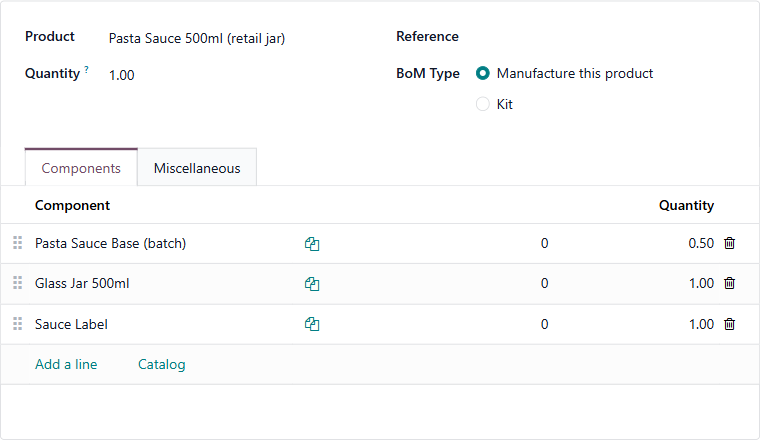
The finished jar is built from a cooked base plus packaging, and the base is its own made item. Odoo holds the recipe as a bill of materials, so you can cost and track a batch of base on its own before it ever becomes a jar.
Data created: a multi-level bill of materials, raw ingredients into a base, the base into the finished jar.

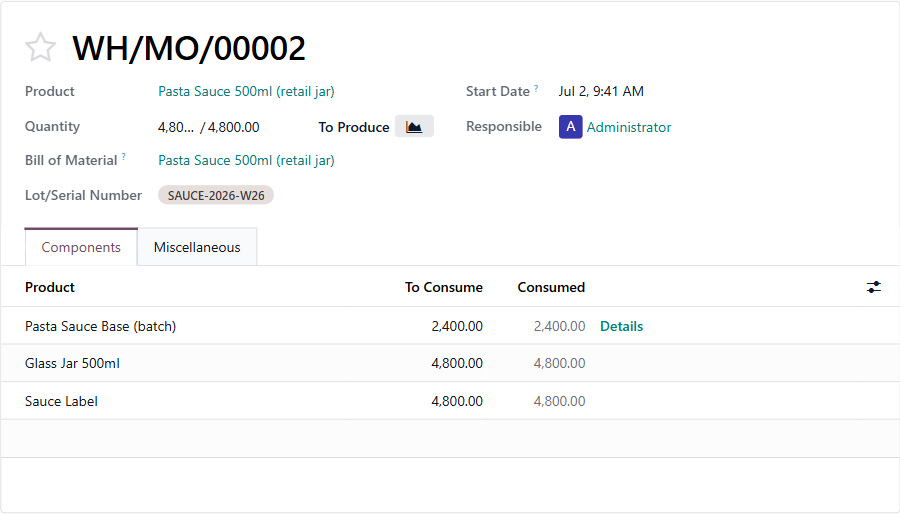
A manufacturing order consumes the base, jars and labels, and produces the finished lot. On the cook line, a pH check (must read ≤ 4.6) and a pass/fail inspection gate the batch, and cook-line labour is capitalized into the goods.
Data created: a finished lot linked to its ingredient lots, a per-batch pH reading, and labour posted to Direct Labour, then Work in Process and Finished Goods Inventory.

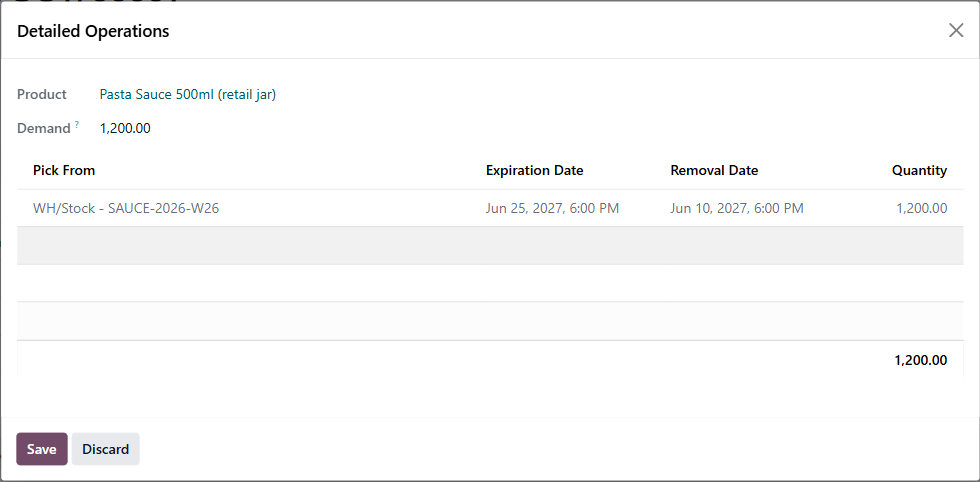
Confirm the order and FEFO reserves the earliest-expiry lot first. You don't pick it, the system knows. Invoice on delivery, and cost of goods posts against the sale.
Data created: a delivery tied to a specific lot, a finished-goods check, and COGS posted at the invoice, matched to the revenue.

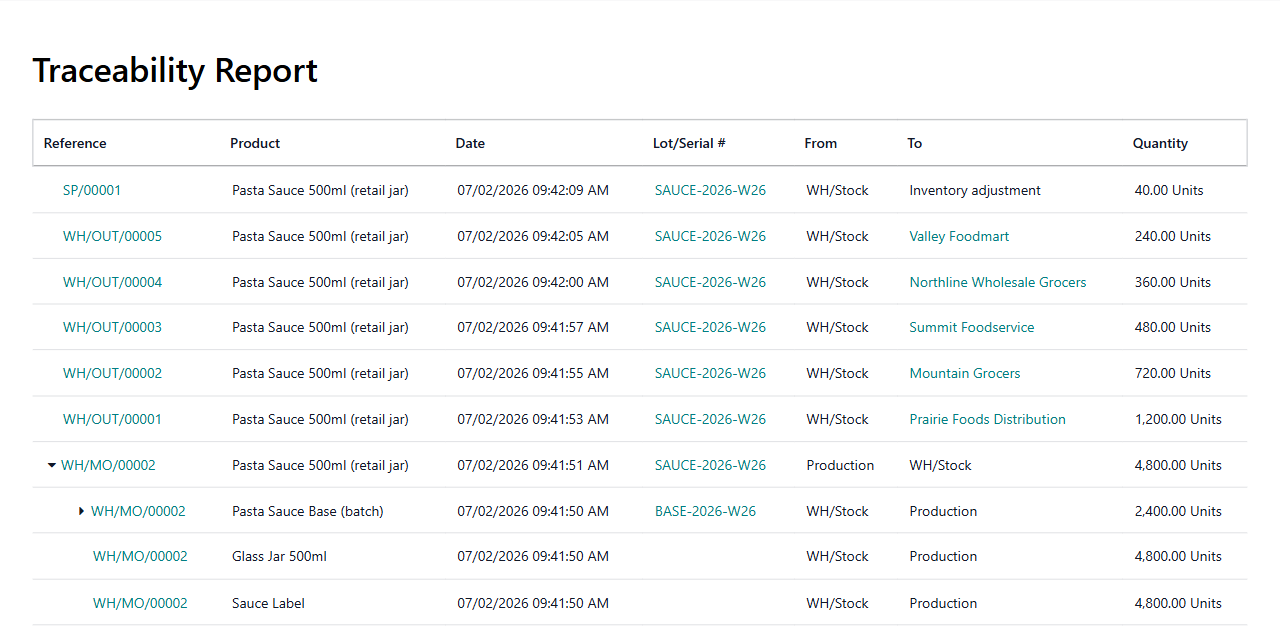
Pick a finished lot and Odoo shows the exact ingredient lots that made it, then every customer it shipped to. That is a recall in seconds, the record CFIA and the FDA expect.
Data created: one-up / one-back lot genealogy across receipts, production, and deliveries.

Every number ties: labour lands in the product, spoilage stays visible, and inventory value equals the general ledger. We prove that before we hand it over, and we build it on your own recipes and products, whether you make sauces, baked goods, beverages, snacks, dairy, or co-pack for other brands, so you watch your business run first.
The same live build, now on the warehouse floor: real storage zones, a cycle count running mid-shift, and inbound freight rolled into the true cost of goods.
Receiving routes each lot to where it belongs: dry goods to the ambient rack, fresh produce and oils to the cold room, allergens to a segregated store, and every incoming lot to QA Hold until quality releases it. A distribution center holds finished stock closer to the buyer.
Built here: storage zones with putaway rules, a QA-hold quarantine, and a second warehouse with finished stock transferred in.

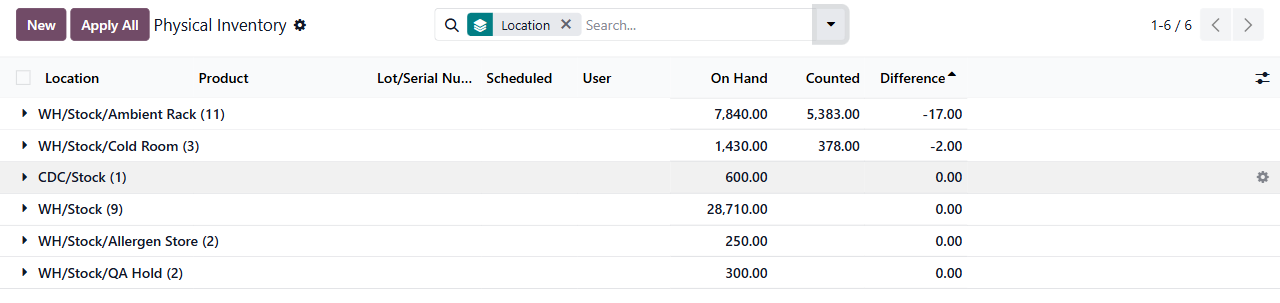
Cycle counts run a slice of SKUs at a time, with no shutdown. A scanner count feeds the difference straight in, and applying it posts the correction to the ledger, so shrinkage stays visible instead of surfacing as a month-end surprise.
Built here: a physical count showing on-hand against counted against difference per lot; applying it corrects the stock and the general ledger together.

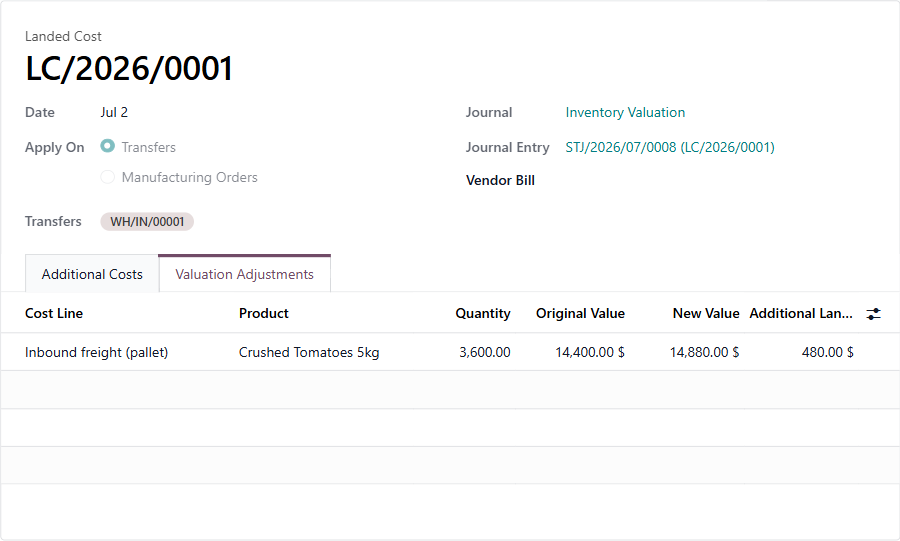
Inbound freight, duty, and brokerage capitalize into the real cost of the ingredient they arrived with. A $480 pallet freight bill spreads across the 3,600 units it carried, so the tomato's true landed cost is $4.13, not $4.00, and every margin downstream stays honest.
Built here: a landed cost tied to the receipt, with the freight rolled into inventory value and the unit cost.

You outgrew QuickBooks and spreadsheets, but a $50,000–$400,000 Aptean or Deacom build is hard to justify at your size. Odoo covers the food-specific work, the same whether you run a bakery, a beverage line, a sauce or condiment plant, a snack or dairy line, or a co-pack operation: lot genealogy, FEFO, allergen control, batch quality, and yield, on one database at SMB pricing. Four things do most of the work:
Aptean and Deacom are the entrenched food ERPs, and they are deep. For a $1–20M maker who outgrew QuickBooks but cannot justify a six-figure vertical build, Odoo covers the same food-critical work and hands you your data on day one.
| Capability | Aptean Food & Beverage | Deacom | Odoo Enterprise |
|---|---|---|---|
| Lot traceability + FEFO | Yes | Yes | Yes |
| Recipe versioning + approval | Yes | Yes | Yes |
| Allergen control on BOMs | Yes | Yes | Via configuration |
| Scale + GS1-128 label printing | Yes | Yes | Via IoT hardware |
| Retail grocery EDI | Yes | Yes | Via connector |
| Typical year-1 cost, estimated | $80k–400k | $50k–400k | $35k–75k |
| Export your data on day one | Not documented | Vendor-gated | Full (CSV / XML / SQL) |
Cost figures are typical year-one estimates for a manufacturer around $10M in revenue, including licensing, implementation, and data migration. None of these vendors publish pricing, so treat every figure as an estimate, not a quote. Odoo's allergen, EDI, and scale integrations are configured or connector-based rather than built in; the trade-off is open data and SMB pricing.
We'll configure Odoo on your real recipes and products, free, so you can watch your own business run first.
Personalized Free Trial for Your BusinessWe build Odoo on your real recipes and products and hand you a working system to explore: lot-traceable, FEFO, batch-costed, books tying. Then you decide.
Personalized Free Trial for Your Business