Agencies run on billable time, but the numbers live in a PM tool, a time tracker, a spreadsheet and QuickBooks that never reconcile. Odoo puts projects, timesheets, invoicing and the books in one database, so utilization, per-client margin and retainer burn are visible in real time. The screens below run on sample data built to reflect how a business like yours works; in a free trial we rebuild it on your own numbers, so you see your business in it before you decide.
One system, running as one


The Odoo apps that run an agency, sharing one set of accounts, hours and books.
Every screen below is a live Odoo build on sample data made to reflect how an agency like yours actually runs - retainers, fixed-fee projects, T&M accounts, a costed team and a month of timesheets. It is a stand-in for your business, not a real client. In the free trial we rebuild it on your own numbers, so you see your own business running in it.
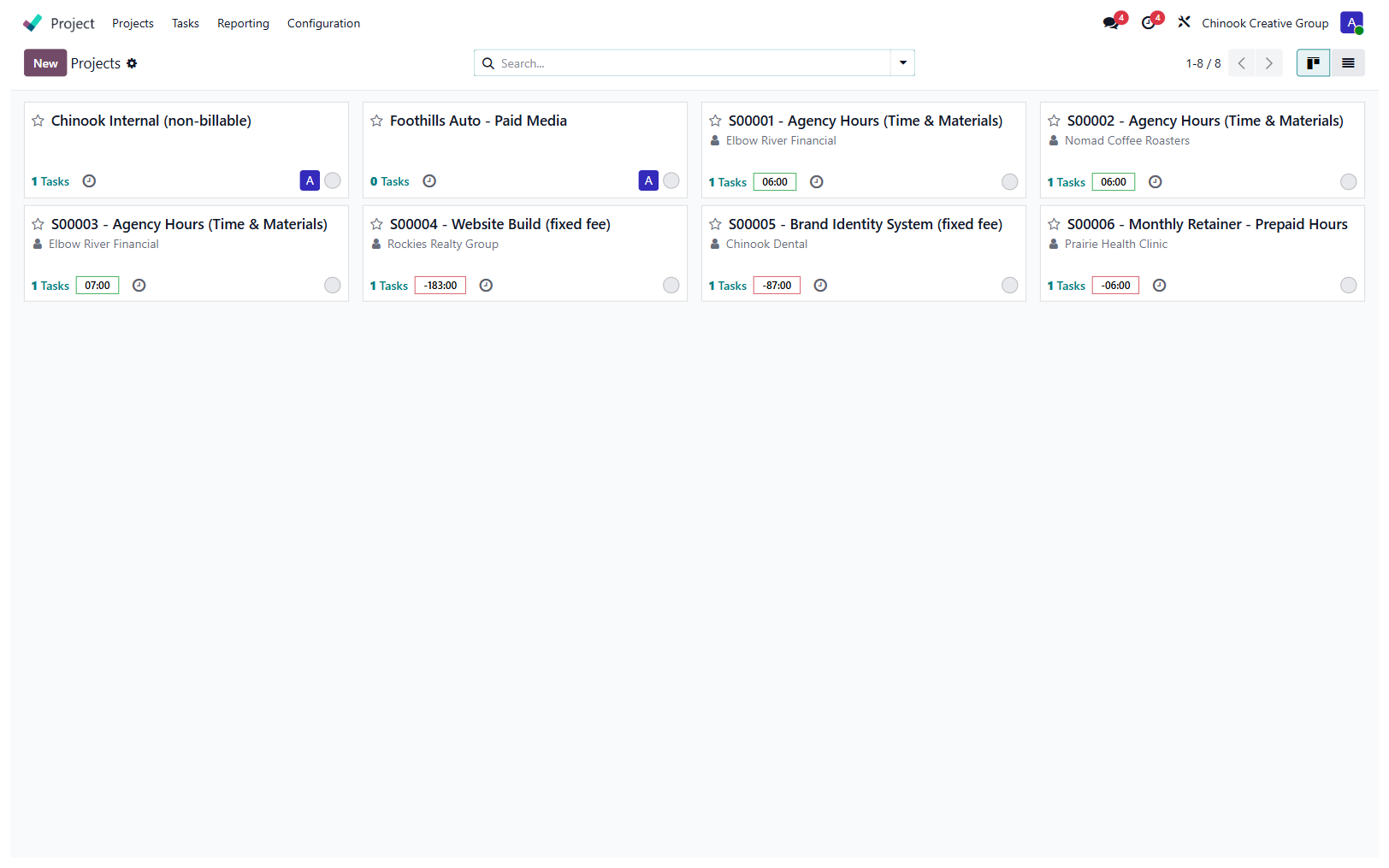
Retainers, fixed-fee projects and time-and-materials all run as tracked projects with an hours budget behind the fee. The red chips flag the work that has run past the hours the fee bought, so an over-serviced account shows up on the list instead of hiding until month-end.
On screen: the client book, each engagement carrying its hours budget, red chips marking the accounts already over the line.

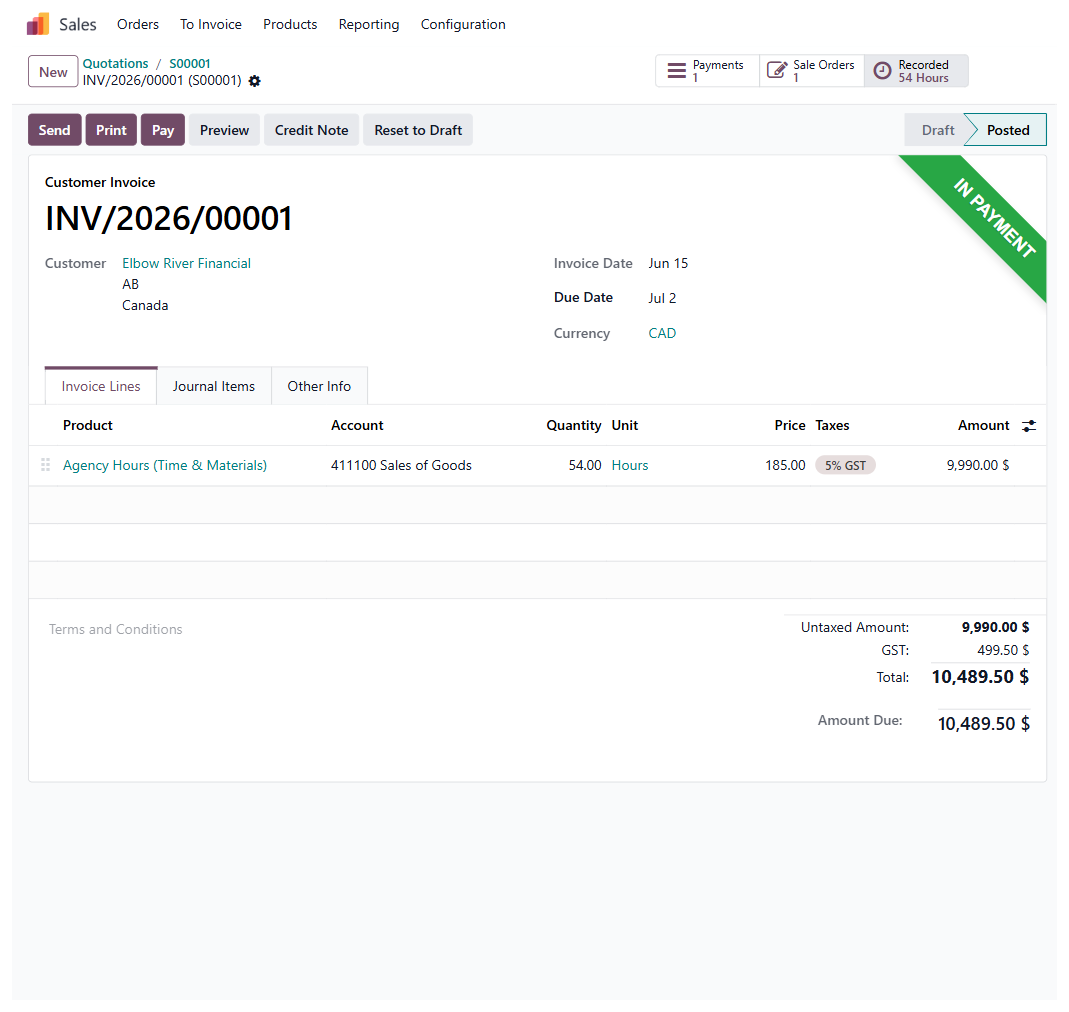
A billable hour logged against a task lands in the sales order's Delivered column at the client's rate. One click turns the week's timesheets into a customer invoice, and it posts to Accounting on its own. The hours never get re-typed into QuickBooks and never silently fall out of billing.
On screen: Elbow River's week of timesheets, 54 hours delivered, turned into a $9,990 invoice in a single step.

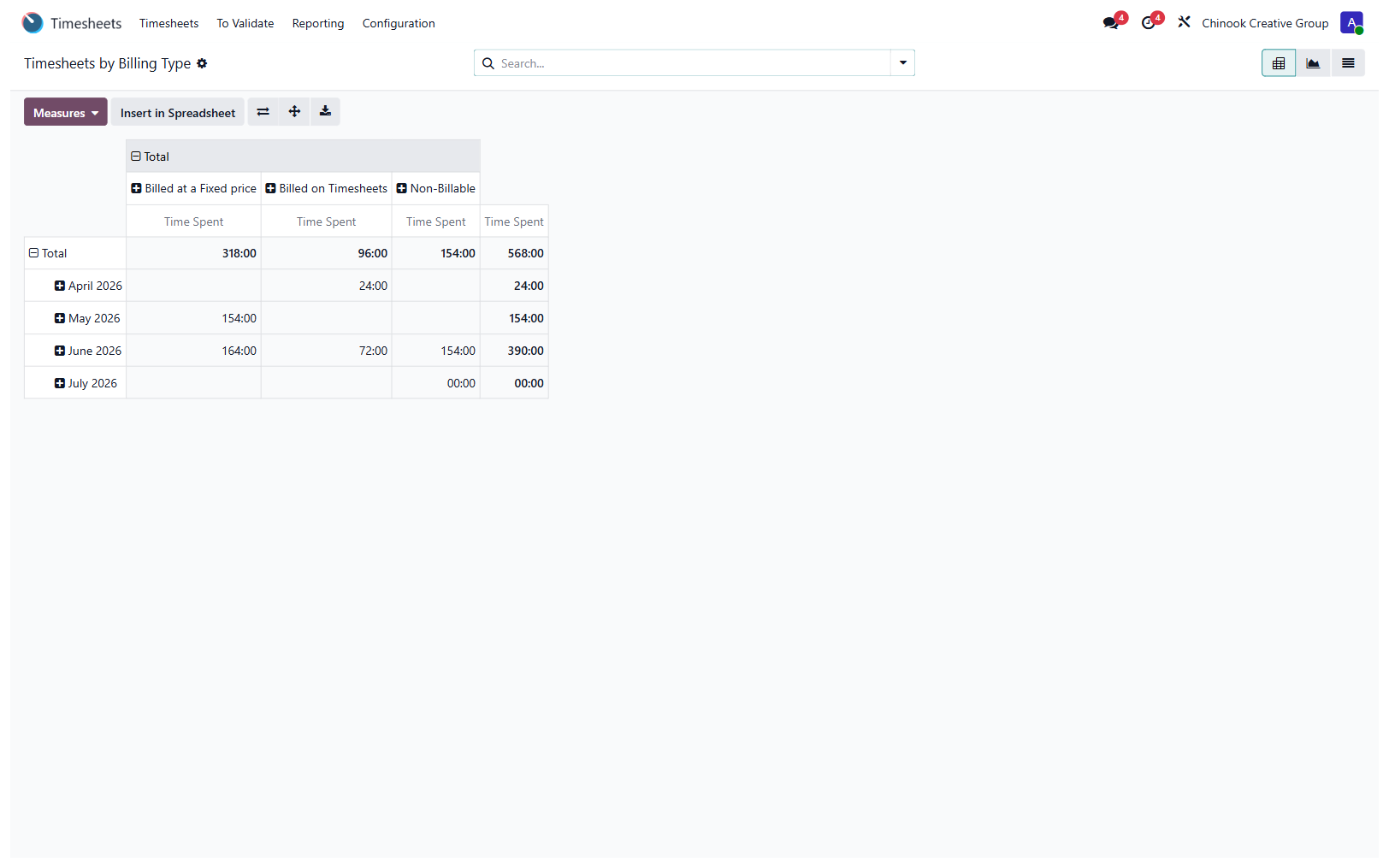
Every hour is tagged billable or non-billable, so the split is the real number, not a vanity 100 percent. Here it reads 414 billable against 154 non-billable, about 73 percent. Healthy agencies target 65 to 80 percent, and honest non-billable logging is what makes the figure worth acting on.
On screen: billable versus non-billable hours across the team, 414 to 154, the utilization landing near 73 percent.

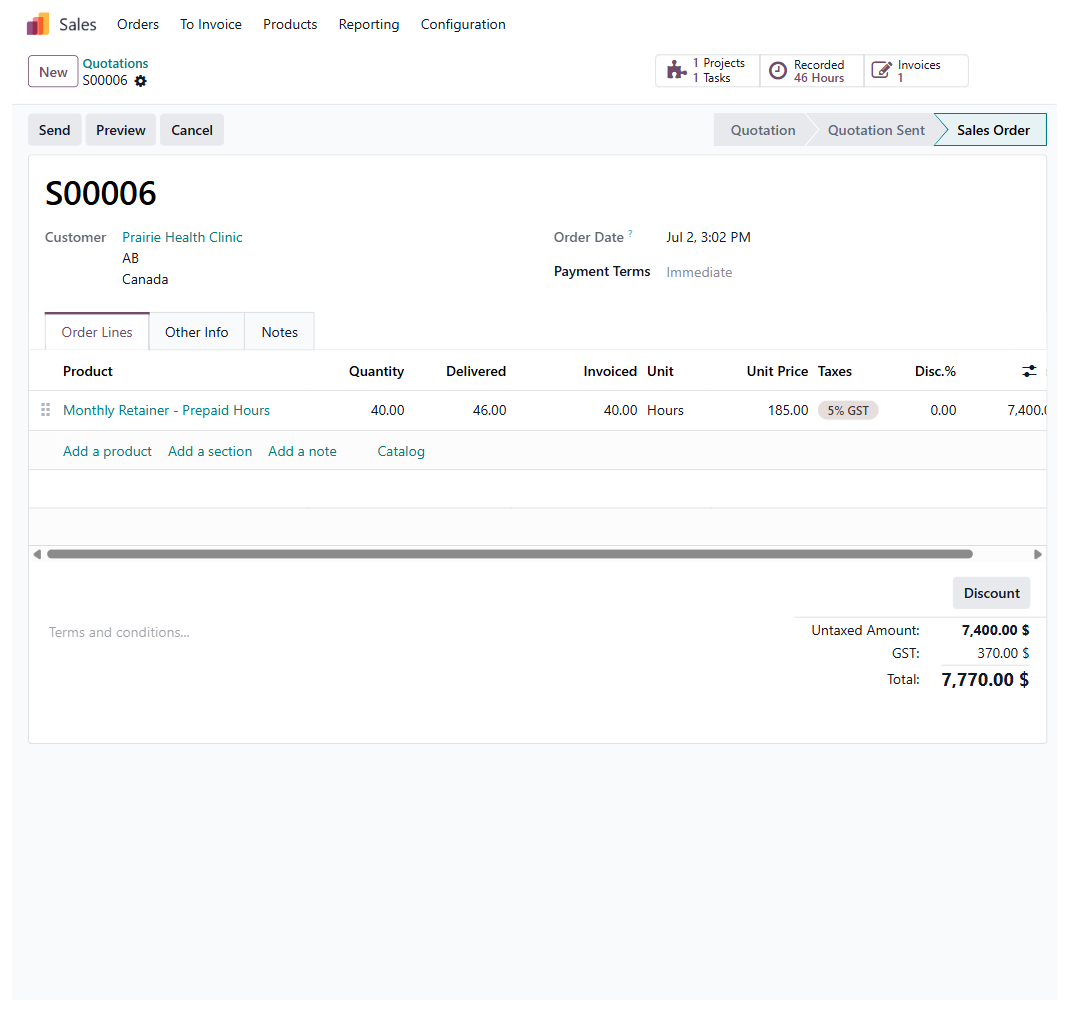
A prepaid retainer sold at 40 hours, 46 delivered. The moment delivered passes the block the account bought, Odoo raises an Upsell activity, so the scope conversation happens mid-month while you can still act on it, not at renewal after the margin is already gone.
On screen: a 40-hour retainer burned to 46 delivered, the Upsell activity raised as delivered crossed the block.

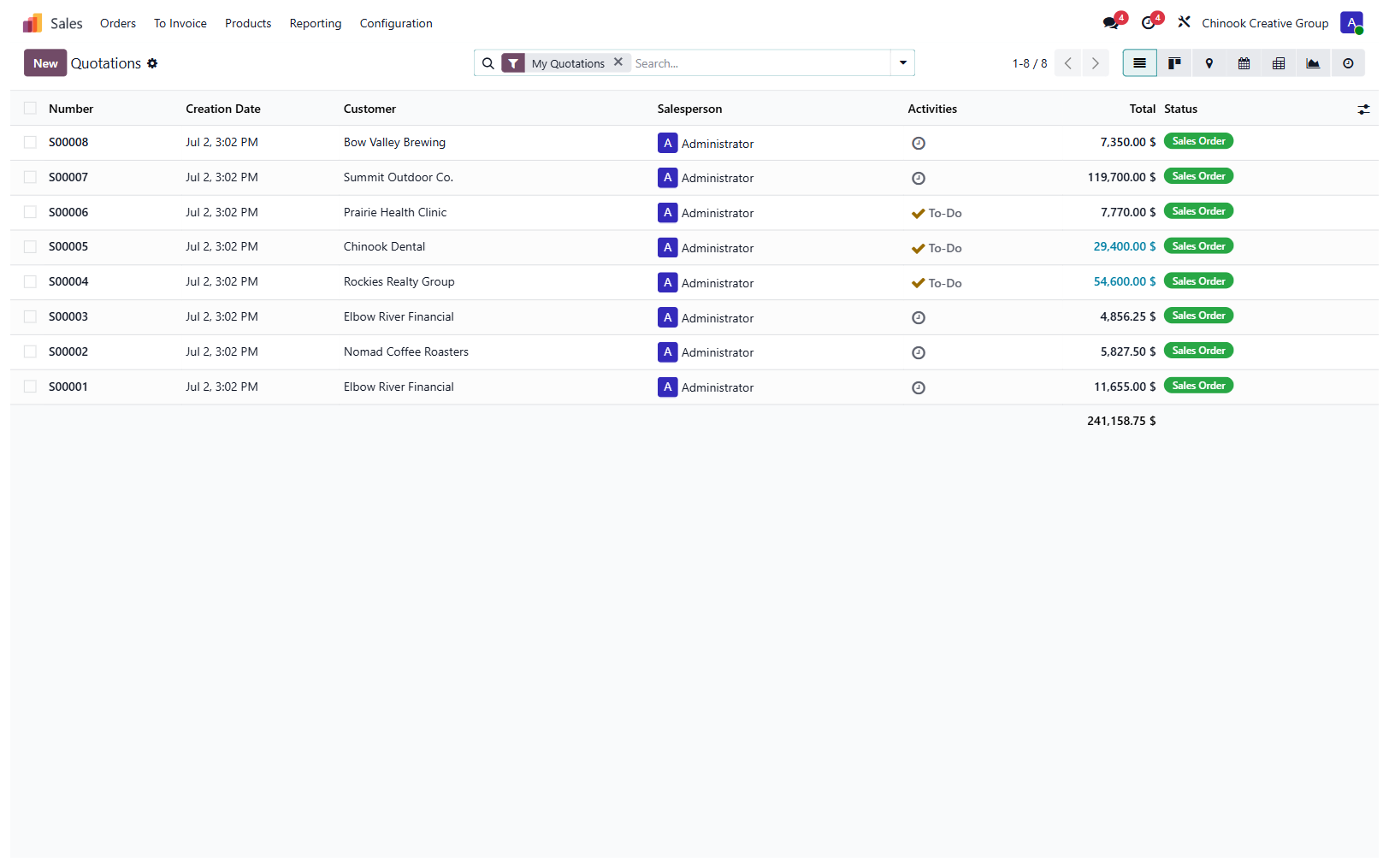
Recurring retainers, fixed-fee projects, time-and-materials and pass-through media on one screen. Retainer prepay is recognized as deferred revenue over the month it is earned, so the revenue line reflects the work delivered rather than the day you happened to bill.
On screen: the order book across all three models plus pass-through media, retainer prepay recognized over the month as deferred revenue.

Per-client and per-project margin, revenue against the cost of the hours actually logged, is visible as the work happens. You fix pricing or scope while the account is still open, not after the year-end review tells you which clients quietly lost money. We build it on your own accounts, retainers and timesheets, so you watch your agency run first.
You outgrew a PM tool plus a time tracker plus a spreadsheet plus QuickBooks, but a Workamajig or Kantata build is a heavy, admin-hungry commitment for a 10 to 60-person business. Odoo covers the work a services agency actually needs, on one database at SMB pricing, with a modern interface your team will use. Four things do most of it:
Most agencies are not choosing between two PSAs. You are running a PM tool for the work, a separate tracker for the hours, a capacity spreadsheet on the side, and QuickBooks for the books, then fighting the seams where they never reconcile. Here is what one Odoo database replaces.
| What you run today | Covered by Odoo |
|---|---|
| A PM tool for the work (Asana, Monday, ClickUp) | Project: one project per client or engagement, tasks, hours budget |
| A separate time tracker (Harvest, Toggl) | Timesheets: hours logged against the task, billable or non-billable |
| A capacity spreadsheet for who is booked | Planning: allocated versus available hours per person |
| Manual invoicing, hours re-typed into QuickBooks | Invoicing straight from timesheets or a milestone, posted to the books |
| QuickBooks for the books, disconnected from delivery | Accounting, with each timesheet and invoice the same record |
Honest scope: real-time utilization and realization dashboards are custom or BI on top of native Timesheets and Planning data, and managed ad-spend-plus-fee billing (the percentage markup on media) is a manual or custom line rather than native at-cost pass-through. We scope those in the fit rather than pretend they ship out of the box.
We'll configure Odoo on a slice of your real accounts, retainers and timesheets, free, so you can watch your own agency run first.
Personalized Free Trial for Your BusinessWe build Odoo on a slice of your real accounts, retainers and timesheets and hand you a working system to explore: hours logged against a task, the week's timesheets turned into an invoice, utilization split billable versus non-billable, a retainer burning down with the Upsell flag, and margin per client tying to the books. Then you decide.
Personalized Free Trial for Your Business